






Like me, you might have found yourself feeling slightly disconcerted by just how quickly 2026 has disappeared. Or perhaps not. I have a theory that this depends on how many holidays you’ve managed to squeeze in this year, although I have absolutely no evidence to support this.
As we approach the end of 2026, I’ve found myself reflecting on the year we’ve had at Vanson Bourne, particularly the conversations we’ve been having with B2B technology companies about their plans for the year ahead.
And it got me thinking…Were there any common threads running through the commercial challenges our clients were bringing to us? Were these simply individual business problems, or could they tell us something about the market insight questions occupying B2B technology companies more broadly?
More importantly, what might these conversations tell us about where B2B technology companies will be focusing their attention in 2027?
Looking back across our research projects, briefs and client conversations, five core themes stood out. From questioning how well they really understand prospective customers, to identifying where they can credibly compete and grow, we saw organisations looking to challenge established assumptions and make more informed decisions about where to focus their efforts.
And I suspect these questions are only going to become harder to ignore in 2027. AI is finding its way into more and more of our everyday workflows, and with that comes a whole new set of expectations about what technology should be able to do. Meanwhile, businesses are still having to make difficult decisions about where their money goes, and there’s certainly no shortage of companies competing for a share of it.
If there’s one thing our conversations this year have reinforced, it’s that there’s a big difference between thinking you know your market and really understanding it. And as we head into 2027, I think that difference could become increasingly important in determining which businesses find room to grow.
With this in mind, here are the five market insight priorities that caught my attention in 2026, and why we think they’re worth considering as you plan for 2027.
1. Your current customers might not be telling you what you need to know about your next ones
Earlier this year, we were approached by a technology consultancy facing what I’d argue is a rather good problem to have. They’d grown successfully through referrals and existing relationships but were looking to take things a step further and reach customers beyond their existing network.
From their perspective, they knew their existing clients well. What they weren’t so sure about was whether that understanding would translate to the wider market.
As they put it:
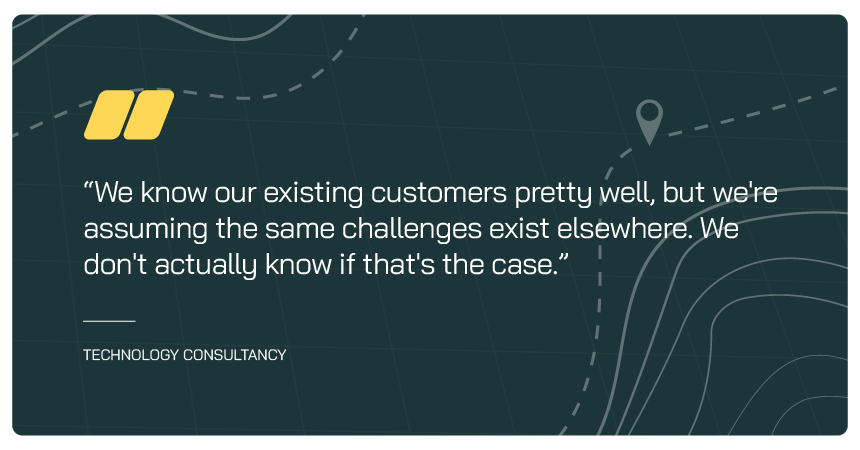
I thought this was a particularly interesting admission. It’s easy to build a picture of your ideal customer around the people you’ve already convinced, especially when they’ve been coming to you through recommendations. But those who don’t know you may have quite different priorities or need a different reason to consider working with you.
For a business hoping to grow beyond its existing network, relying on what it already knows could mean overlooking the very things that would help it reach new buyers.
Our view?
As we head into 2027, we’d encourage businesses looking to expand their customer base to question how much of their growth strategy is built around existing customers.
If you’re looking to reach new audiences, do you really understand the challenges they’re facing, what would prompt them to seek a solution, and what might stop them choosing you?
2. Knowing your competitors isn’t the same as knowing how to compete
In another conversation this year, we spoke with a technology consultancy looking to rethink its approach to its market.
They’d been targeting specific organisations, but lengthy decision-making processes were slowing things down. Meanwhile, their service offering had evolved, and they were questioning whether their positioning was doing them any favours against more specialist competitors.
Rather than treating these as separate problems, the client wanted to reconsider its approach more broadly.
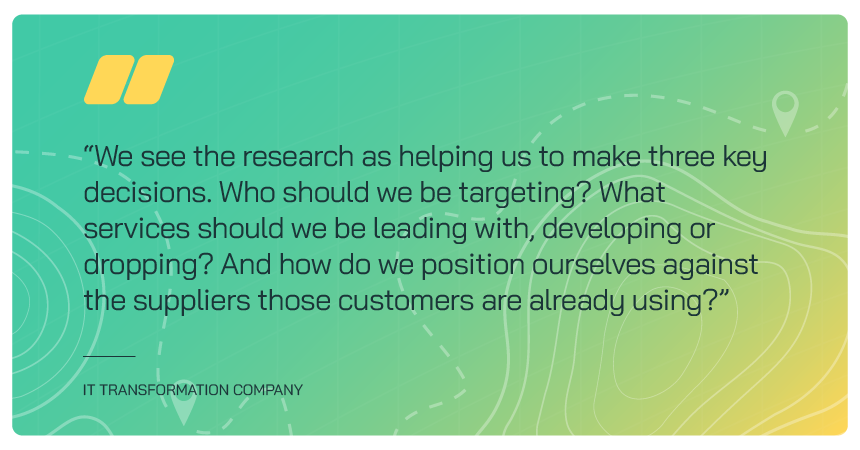
What interested me was the willingness to question a strategy that had, at least historically, made sense.
Businesses can become quite attached to their established markets and ways of competing. Understandably so. But when your offering has evolved or sales are becoming harder to secure, it’s worth considering whether the market you’re pursuing is still the best fit for your business.
Our view?
We’d encourage you to question whether the competitive strategies that have served them well in the past are still the right ones for the market you’re operating in today.
For our How Brands Know report, seven in ten buyers told us it’s becoming harder to see meaningful differences between vendors. With so many businesses struggling to stand out, it’s worth questioning whether you’re approaching the competition in the right way. Are you competing for the right customers? Do you really understand what those buyers value, and whether your offering gives them a good enough reason to choose you over the alternatives?
And perhaps most importantly, are you so focused on figuring out how to beat your competitors that you’ve forgotten to question whether you’re fighting the right battles in the first place?
3. Early success doesn’t guarantee success in a wider market
Another interesting enquiry we received this year came from a technology company looking to expand beyond its established market.
They’d seen encouraging signs that their offering could appeal to a wider audience. But rather than assuming early success meant there was a bigger market waiting, they wanted to understand whether the demand was really there.
I thought this was a sensible approach, particularly when it’s so easy to get carried away by a promising early result.
Early adopters can be encouraging, especially when you’re testing something new. But their enthusiasm doesn’t necessarily reflect the wider market. Other organisations might not face the same problems or may be perfectly happy with how they’re currently doing things.
Our view?
With budgets likely to remain under scrutiny in 2027, we think businesses will need to be increasingly selective about which growth opportunities deserve investment.
If you’re considering taking an existing product into a new market, it’s worth asking whether your early successes are representative of a wider opportunity, or whether you’ve simply found a particularly enthusiastic customer.
4. Technology adoption doesn’t always equate to business value
Across several of our research projects this year, we’ve been exploring how organisations are using AI and automation in practice. And one thing that’s struck us is how little an adoption figure can tell you on its own.
A business might proudly report that it’s using AI, but what does that actually mean? Is it embedded in everyday workflows, or are employees still experimenting with it around the edges? Are organisations seeing meaningful improvements, or are they finding that the technology introduces challenges they hadn’t anticipated?
In one conversation, a technology company was particularly keen to move beyond the excitement surrounding AI, and understand what organisations were actually experiencing.
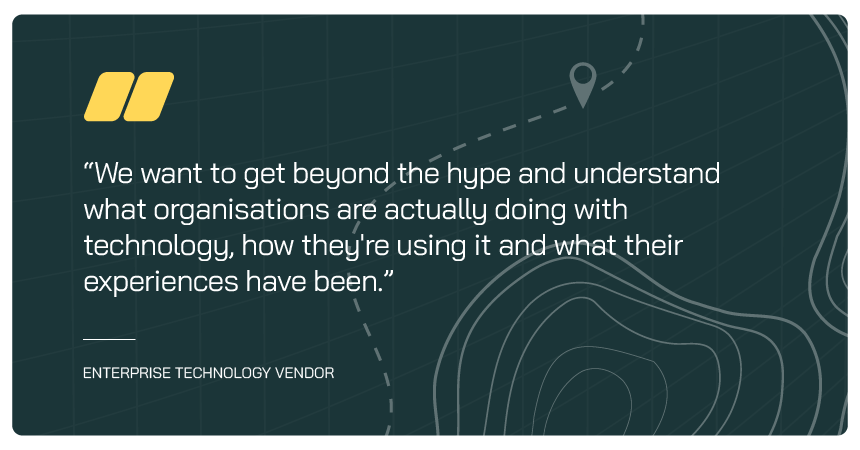
It’s a point worth remembering, particularly when technology adoption figures can make for such compelling headlines.
Our view?
I suspect 2027 will see a lot more businesses questioning what they’re actually getting for their investment in AI. The novelty is starting to wear off and simply being able to say you’ve adopted it isn’t quite the achievement it once was.
For technology vendors, we’d recommend getting a little more curious about what happens once customers start using their products. Are they getting the benefits they expected? Or are there frustrations and workarounds that nobody’s really paying attention to?
As one IT decision maker told us in our Easy to say, harder to do report: “Do better research up front and come prepared and then listen to what is shared and evolve the offerings aligned to our needs.”
5. Sometimes the most useful research is the research that proves you wrong
One conversation that particularly stuck with me came from a company looking to better understand where it might fit within a changing market.
What interested me was that they weren’t looking for research to reinforce what they already believed about their offering. They wanted to understand whether there was a genuine gap in the market they could address, even if that meant questioning some of their existing assumptions.
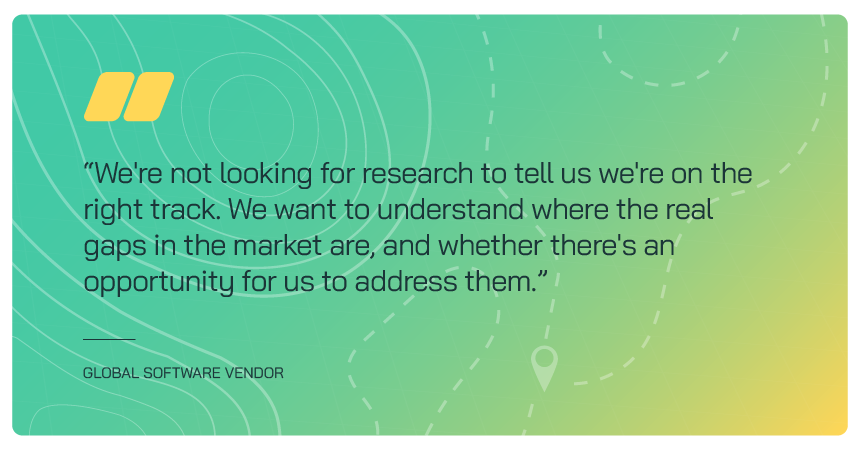
It’s understandable that businesses want research to support the direction they’re already heading in. Nobody is especially keen to discover that something they’ve invested considerable time and money in might need rethinking.
But if we go into research already knowing the answer we’re hoping to find, there’s a risk we’ll overlook something important.
Our view?
I’d encourage businesses to think about how willing they really are to have their plans challenged. There’s plenty of uncertainty about how markets will evolve, and it’s tempting to seek reassurance that the decisions we’ve already made are the right ones.
But that can be a rather expensive habit. If you’re only looking for evidence that supports your existing strategy, you risk missing the early signs that something needs to change.
In summary
If there’s one thing our conversations this year have reinforced, it’s that even the most established technology organisations still have questions about their markets. And with plenty of change on the horizon, I suspect those questions aren’t going to get any easier.
So, as you start thinking about your plans for 2027, here are five things we’d encourage you to do:
- Get to know the customers you haven’t won yet: find out what would prompt them to consider your offering, and what’s stopping them today
- Reassess where and how you compete: focus on where you have the strongest opportunity to win, rather than competing harder in your existing markets.
- Test the wider market before committing to expansion: establish how widespread the need for your offering really is, what alternatives potential buyers are using and whether there’s enough demand to justify further investment.
- Go beyond adoption: understand how your products are being used and use those insights to identify opportunities for improvement.
- Put your assumptions to the test: be willing to rethink your strategy if the research reveals different needs, unexpected gaps or opportunities you hadn’t considered
You might already be doing some of these things. Others might need a bit more attention. Either way, it’s worth making sure your plans for 2027 are grounded in what you know about your market, rather than what you’re assuming.
If any of these challenges sound familiar, we’d be happy to have a conversation about how our specialist B2B tech market insight research could help you tackle them.